
Posts

A worn garage door spring lets the door sag or hang unevenly instead of sitting flat in its frame. That unevenness pulls the weatherstripping away from the frame on one or more sides, creating small gaps where air moves in and out. The longer a weak spring goes unaddressed, the wider those gaps tend to…
Read More
Warped panels, unbalanced springs, dust-clogged sensors, rusted hardware, and cracked weatherstripping are the top garage door problems Arizona homeowners run into, and each traces back to a specific weather cause. Heat drives spring and panel wear, monsoon dust clogs sensors, and UV exposure dries out seals. Catching these signs early is usually the difference between…
Read More
A garage door torsion spring stores energy as it twists, then releases that energy to lift most of the door’s weight. The opener motor only has to guide the door and control its speed, instead of hauling the full load alone. A properly tensioned garage door spring lowers the motor’s power draw, reduces heat and…
Read More
Arizona’s extreme heat, monsoon humidity, and sharp day-to-night temperature swings put constant stress on garage doors. Metal panels and springs expand in the heat, wood and hardware absorb moisture during monsoon storms, and UV exposure breaks down seals over time. These forces are a major reason garage door repair needs to climb through summer and…
Read More
When a garage door spring breaks, the door instantly loses its counterbalance and becomes too heavy to lift by hand or by the opener. You’ll usually hear a loud bang, and the door may drop partway or jam in place. Cables can slip off the drum once tension releases unevenly, and the opener should not…
Read More
Yes, balance problems call for a trained technician, since fixing them means adjusting or replacing springs that are under high tension. Homeowners can safely test balance by hand by disconnecting the opener and lifting the door halfway to see if it holds, drifts, or shoots up, but correcting whatever that test reveals takes calibrated tools,…
Read More
Yes. The garage door spring, not the opener, carries most of your door’s weight, lifting 90 to 95 percent of the load, so the opener only guides motion and runs its safety sensors. When a spring weakens, the opener absorbs the extra strain and wears out faster. Industry standards require the spring assembly to meet…
Read More
A garage door is out of balance if it won’t hold still when opened halfway, feels heavy to lift by hand, or makes your opener strain and grind. Disconnect the opener, raise the door about halfway, and let go. A balanced door stays put. If it drifts down or shoots up, the spring system has…
Read More
No. A garage door with a broken spring should not be operated. The spring counterbalances a door that typically weighs 130 to 350 pounds. Without it, that weight transfers directly to the opener motor and cables, both of which can fail mid-cycle. Stop using the door immediately. At F&J’s 24 Hour Garage Door Service, we…
Read More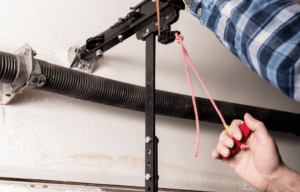
Replacing a garage door spring yourself is possible, but it carries serious safety risks. Garage door torsion springs are under extreme tension, enough to cause severe injury or death if they snap or release suddenly. At F&J’s 24 Hour Garage Door Service, we provide garage door spring repair and replacement in Phoenix around the clock,…
Read More