
Do Garage Door Springs Protect the Opener?
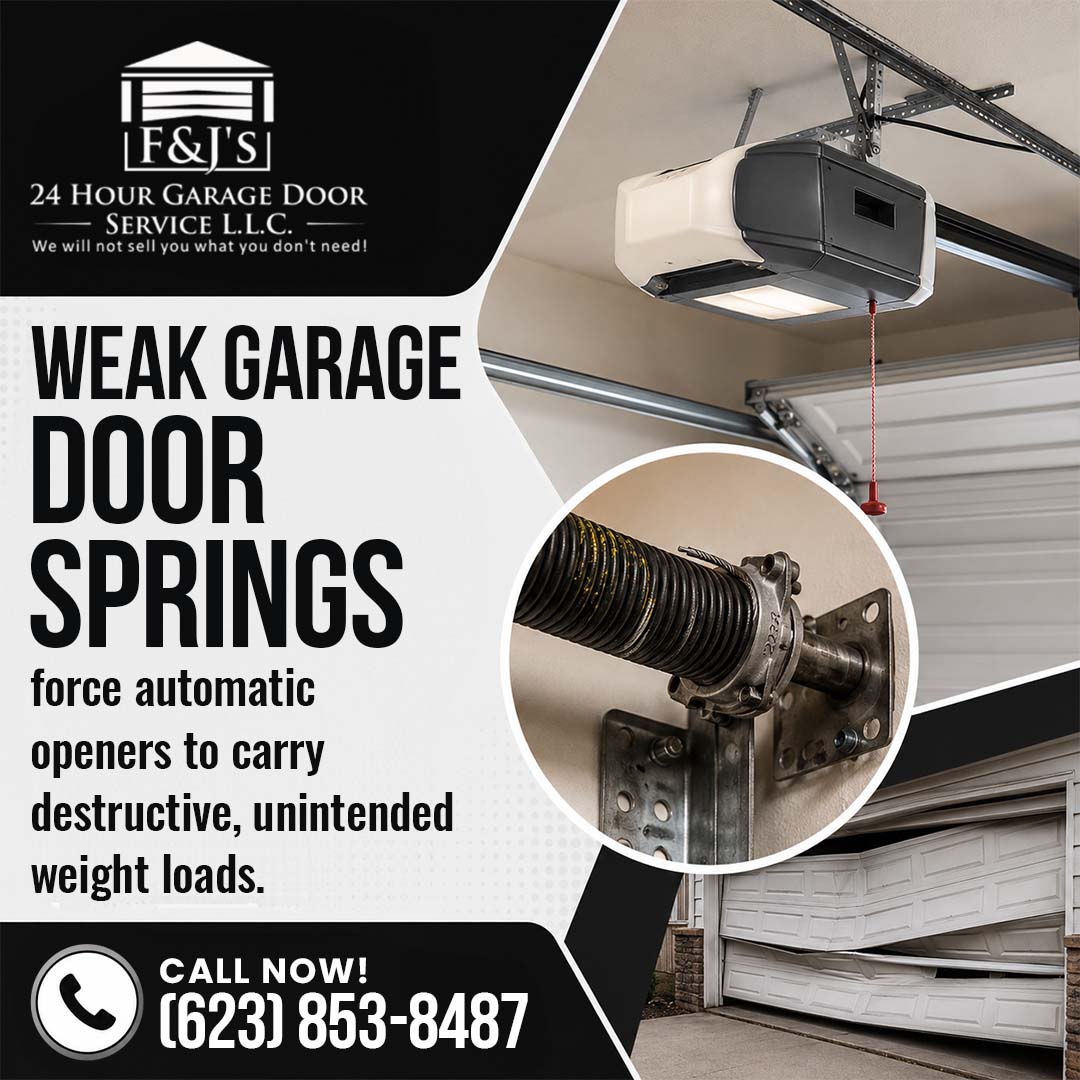
Yes. The garage door spring, not the opener, carries most of your door’s weight, lifting 90 to 95 percent of the load, so the opener only guides motion and runs its safety sensors. When a spring weakens, the opener absorbs the extra strain and wears out faster. Industry standards require the spring assembly to meet a minimum cycle rating. At F&J’s 24 Hour Garage Door Service, we check this balance first, before we ever look at the opener.
How Does a Garage Door Spring Work With the Opener?
A garage door spring stores energy as it winds, then releases that energy to lift the door. The opener was never built to be the primary lifting source; it simply moves a door that’s already balanced by the spring assembly.
If the door holds its position when lifted halfway by hand, with the opener disconnected, the spring is doing its job correctly.
What Happens When the Spring Weakens but the Opener Keeps Running?
The opener’s gears, belt or chain, and drive motor all take on force they weren’t designed for, which shortens the opener’s lifespan and can strip its gears. ANSI/DASMA 102, the national standard for garage door systems, requires the torsion spring counterbalance assembly to support a minimum of 10,000 operating cycles when properly installed and maintained. Replacing an opener without addressing a weak spring usually repeats the same problem within a year or two.
| Component | Normal Role | What Happens If Neglected |
| Spring | Counterbalances door weight | Loses tension, opener bears the full load |
| Cables | Transfer spring force to the door | Fray or slip off the drum |
| Opener | Moves an already-balanced door | Strains, grinds, or fails prematurely |
Signs That Tell You the Opener Is Compensating for a Weak Spring
- The door feels heavier when lifted by hand with the opener disconnected
- The opener motor runs longer or louder to complete one cycle
- The door drifts downward on its own after stopping partway open
- The opener needs frequent adjustment or resets
If several of these apply, schedule a garage door spring repair to confirm the actual source of the strain. F&J’s 24 Hour Garage Door Service technicians test spring tension before recommending any opener work.
Why Does Garage Door Spring Replacement in Phoenix Matter More in Extreme Heat?
Phoenix summers push metal components through repeated expansion and contraction, which accelerates wear on spring coils and cable connections. Homes here, as well as in nearby Peoria and Glendale, also run openers more often during peak heat, since owners avoid leaving doors open manually. This is why we recommend garage door spring replacement in Phoenix before peak summer heat sets in, not after the opener has already taken the strain.
A balanced door isn’t just about convenience, either: the U.S. Consumer Product Safety Commission has documented 54 child deaths from entrapment under automatic garage doors since 1982, one reason the opener’s reversing and sensing features need a properly balanced door to work as designed.
Frequently Asked Questions
- Can I replace a garage door spring myself?
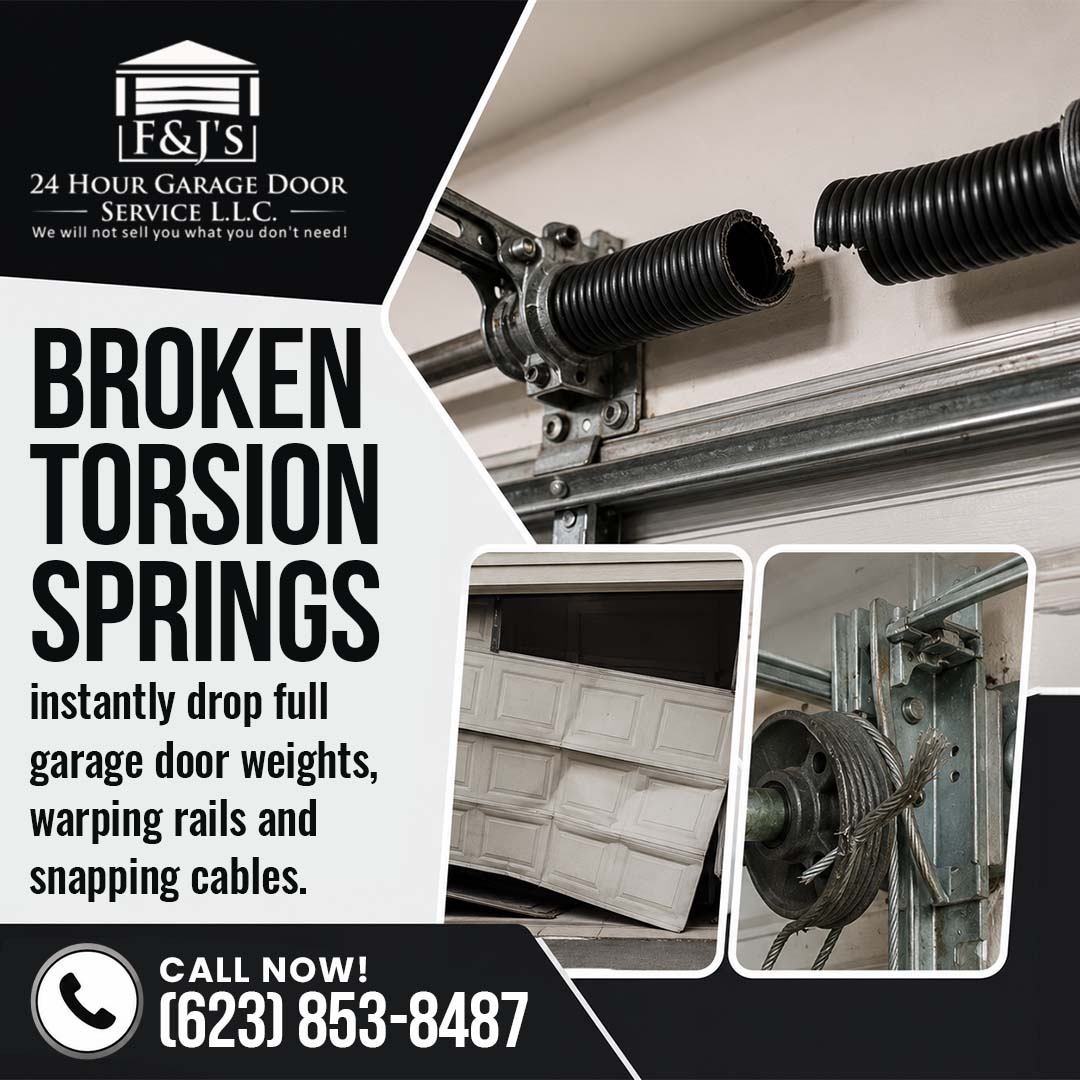
No. Torsion springs hold enough stored force to cause serious injury if released incorrectly.
- How long does a garage door torsion spring typically last?
Most residential torsion springs meet the 10,000-cycle industry minimum, which works out to several years of daily use.
- Should I replace one spring or both at the same time?
If your door uses two springs, replace both together to avoid uneven tension that strains the opener.
Get Your Springs Checked Before Your Opener Pays the Price
If your garage door feels heavy or your opener sounds like it’s overworking, call F&J’s 24 Hour Garage Door Service at (623) 853-8487 or email jsanchez@fnjsgarage.com for a same-day inspection across Phoenix, Peoria, Glendale, Surprise, and the Prescott Valley area. We won’t sell you what you don’t need, just an honest fix for the problem you actually have.
