
Signs Your Garage Door Spring Needs Adjustment Before Full Replacement
Garage doors rely on a properly functioning garage door spring to lift and lower safely. When spring tension begins to shift, you notice changes in movement, weight, and response time. F&J’s 24 Hour Garage Door Service provides support for homeowners dealing with garage door spring repair and garage door spring replacement in Phoenix across residential and commercial systems.
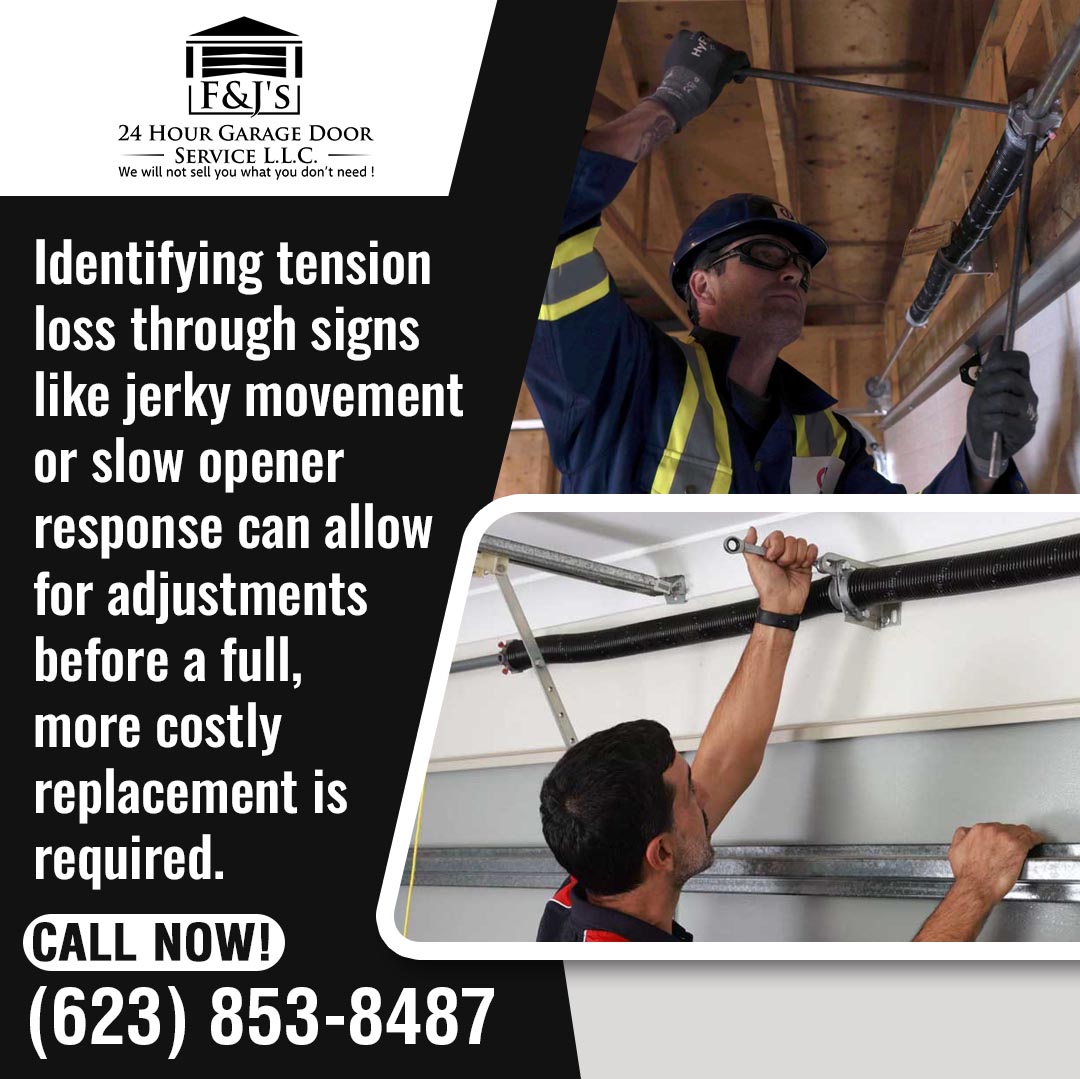
You deal with warning signs long before a full failure happens. A door that feels heavier, moves unevenly, or pauses mid-cycle often points to a garage door spring that needs adjustment rather than immediate replacement. You can identify early issues by watching how the system responds during daily use. This helps you avoid unnecessary spring replacement and keeps repair costs under control.
How Garage Door Springs Work in a Residential System
Garage door springs carry out a mechanical job that affects every part of door movement. You interact with the system daily, so even small changes in spring behavior show up quickly. This section breaks down how a spring functions inside a residential setup and why balance matters.
Role of a Garage Door Spring in Door Balance
A garage door spring balances the door weight so it can move safely with minimal effort. A spring stores mechanical energy while the door is closed and releases it during opening. This movement reduces load on the opener and allows smoother operation.
A garage door spring carries most of the lifting force during operation. Without a working spring, you notice the door becomes difficult to lift and control. The opener alone cannot handle the full weight without added strain on the system. You may also see uneven movement or slower response when the spring loses balance. That shift often shows up before a full failure occurs.
Difference Between Torsion and Extension Springs
A garage door torsion spring sits above the door and rotates to generate lifting force, while extension springs stretch along the sides of the door.
| Spring Type | Location | Operating Method | Common Use |
| Torsion Spring | Above the garage door | Rotational force on a steel shaft | Heavier residential doors |
| Extension Spring | Along the side tracks | Stretching and contracting motion | Older garage systems |
Both garage door torsion spring and extension spring systems balance door weight through a spring mechanism. The difference lies in how each system creates and controls lifting force.
Why Spring Tension Impacts Door Performance
Spring tension controls how smoothly a garage door spring system operates.
Low tension causes:
- Heavy door movement
- Extra load on the opener
High tension causes:
- Fast upward movement
- Reduced control during closing
You notice that incorrect tension changes how the door responds during every cycle. A properly balanced spring keeps movement steady and predictable, which reduces strain across connected parts.
Early Warning Signs of Garage Door Spring Imbalance
Small changes in door movement often point to a spring that has started to lose balance. You notice these signs during daily use, and they usually appear before a full garage door spring repair becomes necessary. Paying attention to how the door behaves helps you act early and avoid larger system strain.
Door Feels Heavier Than Usual
A heavier door often indicates weak spring tension. You notice more effort is needed from the opener or yourself when lifting the door. The spring is no longer carrying the full door weight. This shifts the load to the opener, which is not designed to handle constant lifting pressure alone. Over time, this added strain affects performance and shortens equipment life.
Uneven or Jerky Door Movement
Uneven movement signals an imbalance in the garage door spring system. The door may rise in short bursts or tilt slightly during travel. This happens when the spring does not distribute tension evenly. You can often see one side lifting faster than the other, which points to inconsistent spring force across the system.
Door Stops Midway During Operation
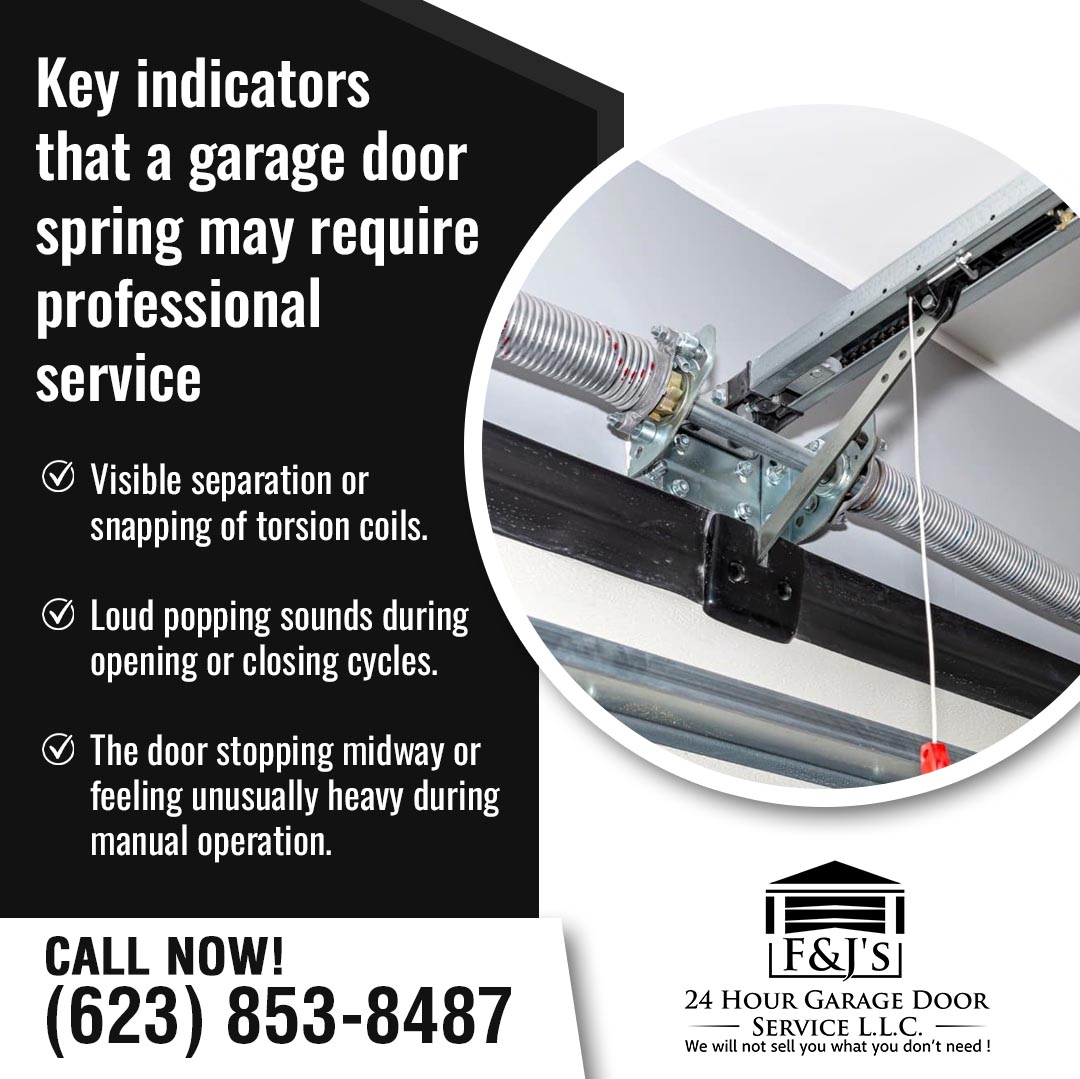
A door that stops mid-cycle often indicates a spring issue. The spring loses the ability to maintain a steady force through the full range of motion. The door pauses or reverses direction before completing its cycle. This pattern shows that the system no longer supports continuous movement.
Loud Noises During Opening or Closing
Unusual noise often comes from a stressed garage door spring or misaligned parts.
You may hear:
- Sharp snapping
- Metal popping
- Grinding movement
These sounds signal tension changes or internal stress. They often appear before a spring repair becomes necessary.
Slow Response From Garage Door Opener
Slow operation often shows that the opener is compensating for a weak spring. The motor takes longer to start or complete movement. Reduced spring support forces the opener to work harder. This added load increases wear on internal components and affects long-term performance.
When a Garage Door Spring Needs Adjustment Instead of Replacement
Garage door springs shift in performance over time due to repeated use and tension changes. You can often correct early issues with an adjustment before the system reaches a failure point.
Minor Tension Loss vs Structural Spring Damage
Garage door spring adjustment applies when the spring still holds structure but no longer carries balanced tension. You deal with adjustment needs when the spring remains intact but no longer supports even movement. This means the system still works, but not at the same balance level as before.
Replacement becomes the correct path under these conditions:
- The spring is broken
- The coil is separated
- Metal fatigue shows across the spring surface
In these cases, adjustment will not restore function. The hardware has already reached failure.
Adjustment restores balance without replacing the spring. You can often bring the system back into proper working condition by correcting tension levels rather than replacing parts.
Signs That Indicate Adjustment Is Still Possible
Adjustment is suitable when the garage door spring system still operates but shows an imbalance. You notice an early imbalance through small but consistent changes in door behavior. The system continues to run, but the movement feels different than usual.
Common indicators include:
- Slight heaviness during lift or close cycles
- Mild uneven movement across the door path
- Increased strain on the opener motor
- No visible break or separation in the spring
These conditions often point toward garage door spring repair rather than full replacement. You still have structural integrity in the spring, so correction focuses on restoring balance instead of rebuilding the system.
Risks of Delaying Spring Adjustment
Delaying spring adjustment increases strain across the full system. When you ignore early imbalance, the load spreads to other components. This affects more than just the spring.
Possible outcomes include:
- Opener motor overload from extra lifting effort
- Cable wear caused by uneven tension distribution
- Track misalignment due to irregular door travel
- Full spring failure under continued stress
Small imbalances rarely stay isolated. It moves through the system and raises repair needs over time. Early repair reduces system strain and keeps the door operating within safe mechanical limits.
Garage Door Spring Repair vs Adjustment vs Replacement
Garage door spring issues show up in different stages, and each stage calls for a specific type of service. You need to know how adjustment, repair, and replacement differ so you can respond correctly when your door starts acting up. This section breaks down each option in a clear way so you can recognize what your system is telling you.
Garage Door Spring Adjustment Explained
Garage door spring adjustment corrects tension to restore proper door balance. You deal with adjustment when the spring still works, but no longer carries the door weight evenly. The spring stays in place, and the focus is on restoring balance through tension correction. This process does not involve swapping parts. It works on fine-tuning the existing setup so the door moves without resistance or imbalance.
You may notice the door feels slightly heavy or moves unevenly, yet still operates. That usually points to tension drift rather than damage. Adjustment brings the system back to stable movement without replacing the garage door spring.
Garage Door Spring Repair Situations
Garage door spring repair addresses minor mechanical issues affecting performance. You deal with repairs when small mechanical problems affect how the system works. These issues do not always involve a broken spring. Instead, they relate to supporting components that affect spring function.
Examples include:
- Loose brackets
- Cable misalignment
- Minor tension imbalance
Repair restores movement by correcting these smaller faults. It focuses on restoring function without removing the spring or changing core components.
Garage Door Spring Replacement Cases
Garage door spring replacement is required when springs lose structural strength or break. You reach replacement when the spring can no longer support the door safely. At that point, repair or adjustment will not return proper function. The spring must be removed and replaced with a new unit.
Common cases include:
- Broken spring
- Rust-damaged coils
- End-of-life systems
Replacement restores full lifting capability and brings the system back to reliable operation.
How Professionals Decide the Correct Service
Technicians determine whether garage door spring repair, adjustment, or replacement is needed based on system condition. You cannot rely on guesswork with springs. The system operates under stored tension, and small errors can affect performance or safety. A technician reviews how the entire system responds before choosing the service type.
Key checks include:
- Garage door spring integrity
- Door balance performance
- Opener load strain
- Cable condition
Each factor points to either adjustment, repair, or full replacement. This step-by-step review helps match the service to the exact condition of the system.
Professional Garage Door Spring Services by F&J’s 24 Hour Garage Door Service
You rely on your garage door every day, and any issue with a spring can interrupt access and safety. Our team at F&J’s 24 Hour Garage Door Service works directly with you to restore proper function through repair, adjustment, and replacement services tailored to each system condition.
Residential Garage Door Spring Repair Services
Residential services restore safe operation of garage door spring systems. We work with homeowners who notice changes in door movement or spring tension. Some cases only need a spring adjustment to restore balance. Other situations require garage door spring repair or full replacement, depending on wear and damage found during inspection.
We approach each residential job by testing how the spring responds under load. This helps us correct the imbalance early before it places strain on other components like cables or the opener system.
Emergency Garage Door Spring Repair Availability
Emergency spring repair is available 24/7 for urgent failures. A broken spring can stop your door from opening or closing at any time of day. We respond across Phoenix and nearby areas with immediate service to restore access and reduce disruption to your schedule.
At F&J’s 24 Hour Garage Door Service, our team handles urgent cases involving snapped springs, stuck doors, and systems that pose safety risks due to sudden failure.
Garage Door Spring Replacement in Phoenix, AZ
Garage door spring replacement in Phoenix restores full system operation after failure. We replace worn or broken springs with correctly rated torsion systems. After installation, we balance the door and test full movement to bring the system back to stable operation.
Safety Standards Used During Spring Adjustments
Garage door spring adjustment requires controlled handling due to high tension levels. Our technicians use calibrated winding tools and measured tension control during every adjustment. Each step follows a structured process to reduce strain on the system and prevent incorrect spring load distribution.
Service Coverage Across Phoenix and Prescott Valley
Service coverage includes Phoenix and Prescott Valley for all garage door spring needs. We support residential and commercial clients across the region. F&J’s 24 Hour Garage Door Service provides professional services wherever system issues arise.
Schedule Your Garage Door Spring Service Today
If your garage door spring shows early imbalance, you should address it before the system reaches a full breakdown. F&J’s 24 Hour Garage Door Service is ready to help you with garage door spring repair, adjustment, and replacement in Phoenix based on your system condition.
Call (623) 853-8487 or email jsanchez@fnjsgarage.com to book service with us. You get fast response across Phoenix and Prescott Valley for residential and commercial garage door spring issues.
